Customs Clearance and GPSR Product Compliance
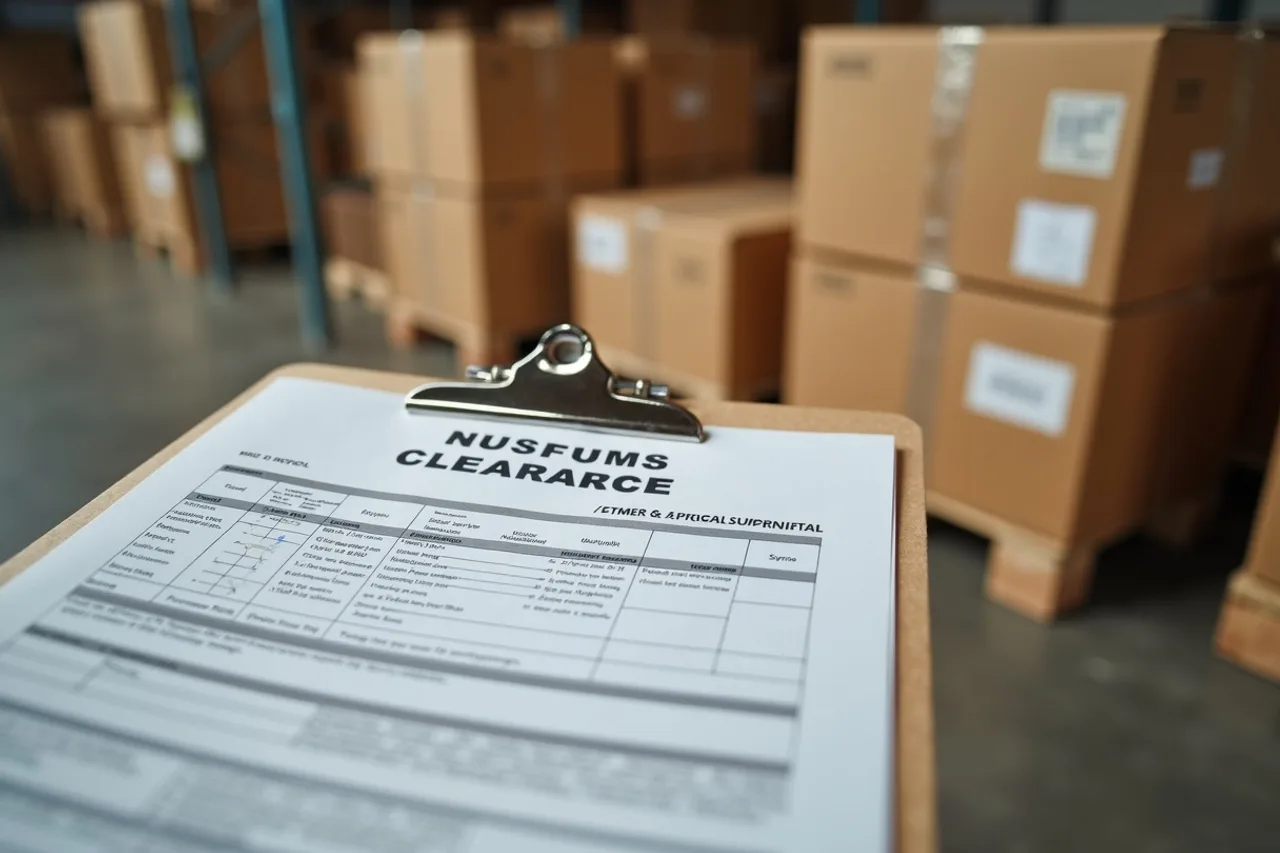
Your shipment from China is stuck in customs clearance? How customs clearance connects to GPSR compliance, what can hold up goods and how to prepare.
Your shipment from China is stuck in customs clearance. The customs agency is asking for documents, the container is sitting there, and your Allegro deadlines are slipping. There's one question on your mind: what does customs clearance have to do with GPSR? The answer: increasingly more. Since Regulation (EU) 2023/988 (GPSR) came into force on 13 December 2024, customs authorities and market surveillance authorities cooperate, and a product that doesn't meet safety requirements can be held right at the EU border.
This article explains how customs clearance connects to GPSR compliance, what can hold up your goods, and how to prepare so your shipment clears smoothly.
Key takeaways
- Customs clearance and GPSR compliance are two different processes, but customs authorities can hold dangerous products.
- Duty and VAT are a tax matter; GPSR concerns safety and the responsible operator in the EU.
- Release for free circulation does not mean GPSR compliance.
- As an importer, you must have documentation ready before the sale, not only after an inspection.
Two different meanings of "placing on the market"
This is where the biggest confusion arises. "Release for free circulation" in the customs sense is a fiscal procedure: paying duty and VAT, after which the goods can legally move around the EU from a tax standpoint. "Placing on the market" in the GPSR sense is the first time a product is made available on the EU market - and that's what triggers the safety obligations.
Customs clearance can succeed while the product is still non-compliant with GPSR. Paying the duty doesn't exempt you from the risk assessment, the technical documentation, or Polish-language warnings.
What customs checks, and what GPSR checks
| Aspect | Customs clearance | GPSR compliance |
|---|---|---|
| Purpose | Duty, VAT, trade statistics | Consumer safety |
| Key document | Customs declaration, invoice, CN/HS code | Technical documentation, risk assessment |
| Operator | Importer / customs agency | Responsible operator in the EU |
| When it applies | At the border, on entry | Throughout the product's time on the market (market surveillance) |
| Consequence of non-compliance | Detention, duty correction | Recall, Safety Gate, hidden listing |
Want your GPSR documentation ready before your goods reach the border?
GPSRReady gives you the complete importer package before shipping: technical documentation, risk assessment, Polish warning and label templates. When your shipment goes through clearance, you already have the paperwork a market surveillance authority might request.
When customs can hold your goods
Customs authorities act as the "first line" of surveillance over products entering the EU. They can suspend release for free circulation and notify market surveillance authorities when they suspect a product:
- lacks the required markings (no importer details, no identification),
- has no accompanying warnings and instructions,
- raises reasonable suspicion of being dangerous,
- belongs to a category frequently reported in Safety Gate (toys, electronics, cosmetics).
In practice, shipments most often held are those lacking details of a responsible operator in the EU. Who that can be is covered in Allegro - local responsible operator (GPSR).
How to prepare a shipment so it clears
- Ensure complete markings are applied at the supplier's end or when repackaging in the EU (importer details, batch number).
- Have technical documentation and a risk assessment ready in case an authority requests them.
- Provide Polish warnings and instructions - missing instructions is grounds for treating a product as dangerous.
- Check the correctness of the tariff code (CN/HS) - a wrong code delays clearance.
- Verify your supplier's certificates - see Certificates from a Chinese supplier and GPSR.
The customs agency's role versus your responsibility
It's worth separating these responsibilities. The customs agency you use handles the customs declaration, tariff classification, and calculation of duty and VAT. It is not your "compliance department" - it isn't responsible for whether the product meets GPSR. Even if the agent clears the shipment without any issues, the obligation to hold technical documentation, a risk assessment, and Polish warnings remains yours as the importer.
This is a common source of misunderstanding: a business assumes that since "the agency sorted everything out", the product must be fully legal. In reality, the agency has handled the fiscal side, while the safety side (GPSR) is a separate track you must handle yourself.
Typical detention scenarios and how to avoid them
From a practical standpoint, products imported from China most often run into trouble in a few recurring situations:
- No EU operator details at all on the product and packaging - the most common reason for detention; solution: apply an importer sticker before shipping.
- A high-risk category product without testing (electronics, toys, cosmetics) - solution: a credible report from an accredited laboratory.
- A mismatch between the declaration and reality - e.g. a different model than the one in the certificate; solution: verify that the model matches the documentation.
- No Polish-language instructions and warnings - treated as grounds for a presumption of danger; solution: a Polish leaflet in every parcel.
The common thread: all these gaps can be closed before shipping from China, if you have a ready set of templates and a procedure. Fixing them after goods have been detained costs several times more.
Your obligations don't end once clearance is done
The fact that your goods have cleared customs and are sitting in your warehouse doesn't mean you're "in the clear". A market surveillance authority (in Poland, among others UOKiK and the Trade Inspection) can inspect the product at any time while it's being sold, and request documentation you must keep for 10 years. Clearance is the beginning, not the end, of your responsibility as an importer. The full list of duties is covered in Importing from China under GPSR - a seller's duties.
Frequently asked questions
Does paying duty and VAT mean the product is GPSR-compliant?
No. Customs clearance is a fiscal procedure concerning duty and taxes. GPSR compliance is a separate safety matter - it requires a risk assessment, technical documentation, Polish warnings, and a responsible operator in the EU. You can clear customs and still not be GPSR-compliant.
Can customs hold my shipment for lack of GPSR documentation?
Yes. Customs authorities cooperate with market surveillance and can suspend release for free circulation of a product that raises suspicion of non-compliance - e.g. missing markings, warnings, or importer details. The most common reason is missing details of a responsible operator in the EU.
Will the customs agency prepare my GPSR documentation for me?
No. The customs agency handles clearance (duty, VAT, declaration), but isn't responsible for your GPSR compliance. You must arrange the technical documentation, risk assessment, and warnings yourself as the importer, before the product goes on sale.
When is the best time to prepare GPSR documentation - before or after clearance?
Before. Documentation should be ready before the goods reach the border, because customs or market surveillance authorities may request it. Assembling paperwork after a shipment has been detained means downtime, storage costs, and the risk of missing sales deadlines.