Labelling Products From China: GPSR Requirements
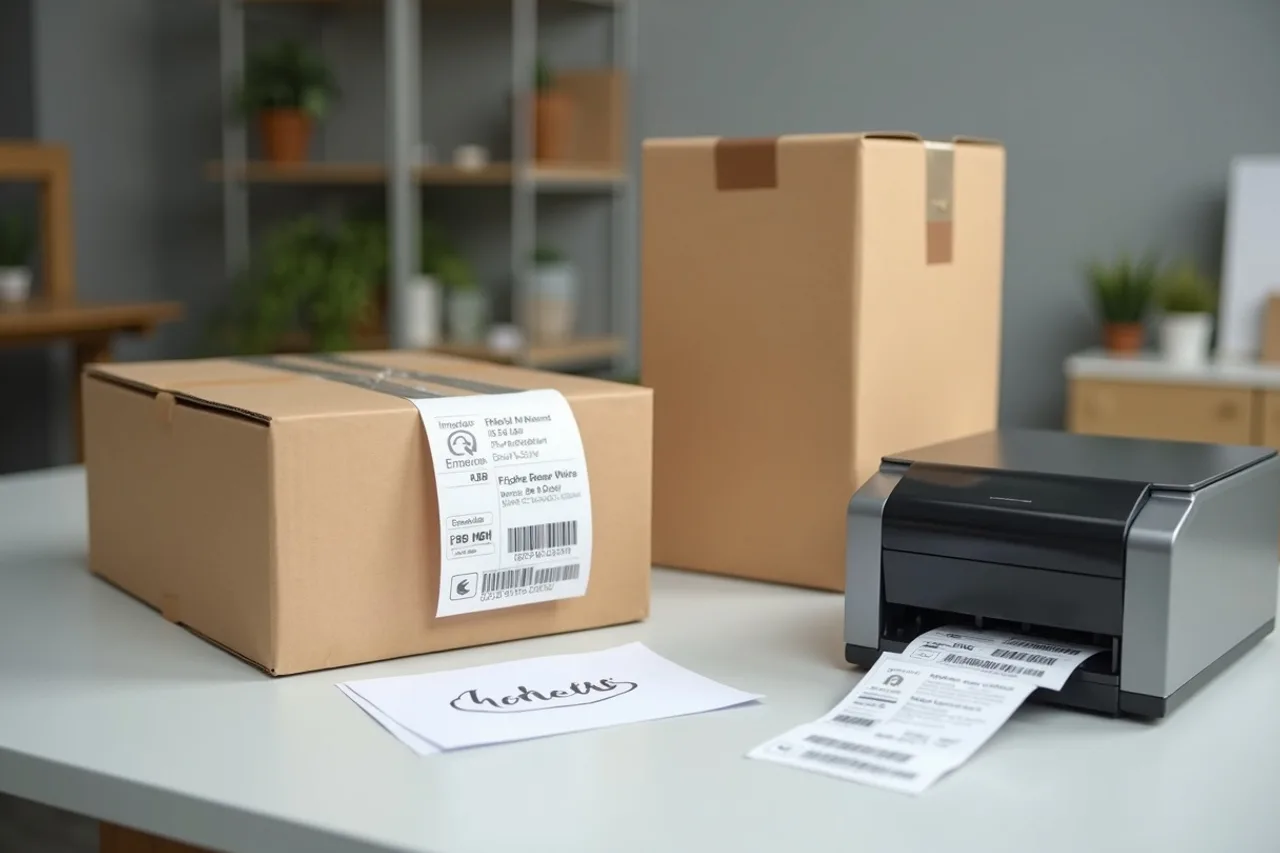
A parcel from China arrives at your address. Inside is a product labelled in Chinese and English, bearing the name of a factory nobody in Poland has heard of.
A parcel from China arrives at your address. Inside is a product labelled in Chinese and English, bearing the name of a factory nobody in Poland has heard of. You list it on Allegro exactly as it arrived - and you've just made one of the most common mistakes under Regulation (EU) 2023/988 (GPSR), in force since 13 December 2024. GPSR requires specific data on the product: including your name and address as importer. A factory label from Shenzhen doesn't satisfy that.
This article is a practical guide to labelling a product from China in line with GPSR: what must be on the label, where, and in what language.
Key takeaways
- The product must be marked so that the manufacturer and importer can be identified (name + address).
- It must carry an element identifying the specific unit/batch (type, batch, or serial number).
- Safety warnings and instructions must be in Polish.
- As an importer from China without an EU manufacturer, you are the responsible person (Article 16 GPSR) with your own duties under Article 11 - including making sure the markings are complete.
What must be on the label under GPSR
GPSR (Articles 9 and 11) requires a set of identification data and safety information. For an importer from China, the full set looks like this:
| Element | Required | Notes |
|---|---|---|
| Manufacturer's name and address | Yes | The Chinese manufacturer - if known |
| Importer's name and address | Yes | Your company, established in the EU |
| Type / batch / serial number | Yes | Identification of a specific unit |
| Safety warnings (Polish) | Yes, where applicable | Follow from the risk assessment |
| Pictograms / regulatory markings | Where relevant for the category | E.g. age, material, disposal |
The data must be legible, durable, and placed on the product. If that's not possible (small product) - on the packaging or in an accompanying document.
Need a ready-made importer label template?
GPSRReady includes label templates with fields for importer details, batch number, and Polish warnings, plus a risk assessment that tells you which warnings to add. You print the sticker, stick it on the product from China, and publish a GPSR-compliant listing.
Importer details - the most important addition
This is the element Allegro sellers forget most often. GPSR requires the importer to place on the product or packaging their name, registered trade name or trademark, and postal address. This lets authorities and consumers know who in the EU is responsible for the product.
In practice: prepare a sticker with your company details and apply it to every unit or bulk package before shipping. This data must match what's in Allegro's GPSR form - see Allegro - local responsible operator (GPSR).
Batch number and traceability
The product must have an element allowing it to be identified - a type, batch, or serial number. This is crucial for a potential recall: if one batch turns out to be faulty, you must be able to identify which units it covers.
If the factory doesn't apply a batch number, agree on a numbering system with them at the order stage, or apply your own batch number when repackaging in the EU. Without this, traceability is incomplete.
Language - why a Chinese-English label isn't enough
Safety warnings and instructions must be in a language easily understood by consumers in the country of sale. For Poland, that's Polish. A factory label in Chinese and English only satisfies this partially (the company details can remain in the original, but warnings and instructions - must be in Polish).
The solution: an additional Polish sticker with warnings, plus Polish instructions in the parcel. More on the warnings themselves: Warnings and instructions in the listing - GPSR requirements.
Where to place the data when the product is small
GPSR provides a hierarchy: place the data on the product; if that's not possible due to size or nature - on the packaging; and if that's not possible either - in an accompanying document. You cannot, however, omit the data altogether. For a small product (e.g. jewellery, accessories), a label on the packaging plus a leaflet is most common.
Labelling checklist before shipping
- The label contains the importer's details (name + EU address).
- The type/batch/serial number is visible.
- Polish warnings are applied and follow from the risk assessment.
- Pictograms for the category (age, disposal, material) are present.
- Polish instructions are in the parcel.
- The label data matches the data in Allegro's GPSR form.
Frequently asked questions
Do I have to remove the Chinese factory label?
You don't have to remove it - the manufacturer's details can remain. However, you must add your own importer label (name and EU address) and ensure warnings and instructions are provided in Polish. The Chinese label alone doesn't meet GPSR requirements for the Polish market.
Can the importer's details be in the listing description only, without a sticker on the product?
No. GPSR requires the data to be placed on the product or packaging (or, as a last resort, in an accompanying document). Information only in the Allegro description isn't enough - the consumer must have access to the data after opening the parcel too.
What if the factory doesn't provide a batch number?
Agree on a numbering system with the factory at the order stage, or apply your own batch number when repackaging in the EU. A batch number is essential for traceability and any potential product recall.
Does the label have to be durable?
Yes. Identification markings and warnings should be durable and legible throughout the product's period of use. A sticker that falls off after the first wash doesn't meet the durability requirement.