Product Traceability Under GPSR: A Practical Guide
A report comes in to your Allegro shop: several units of the night light you sell are flickering and overheating.
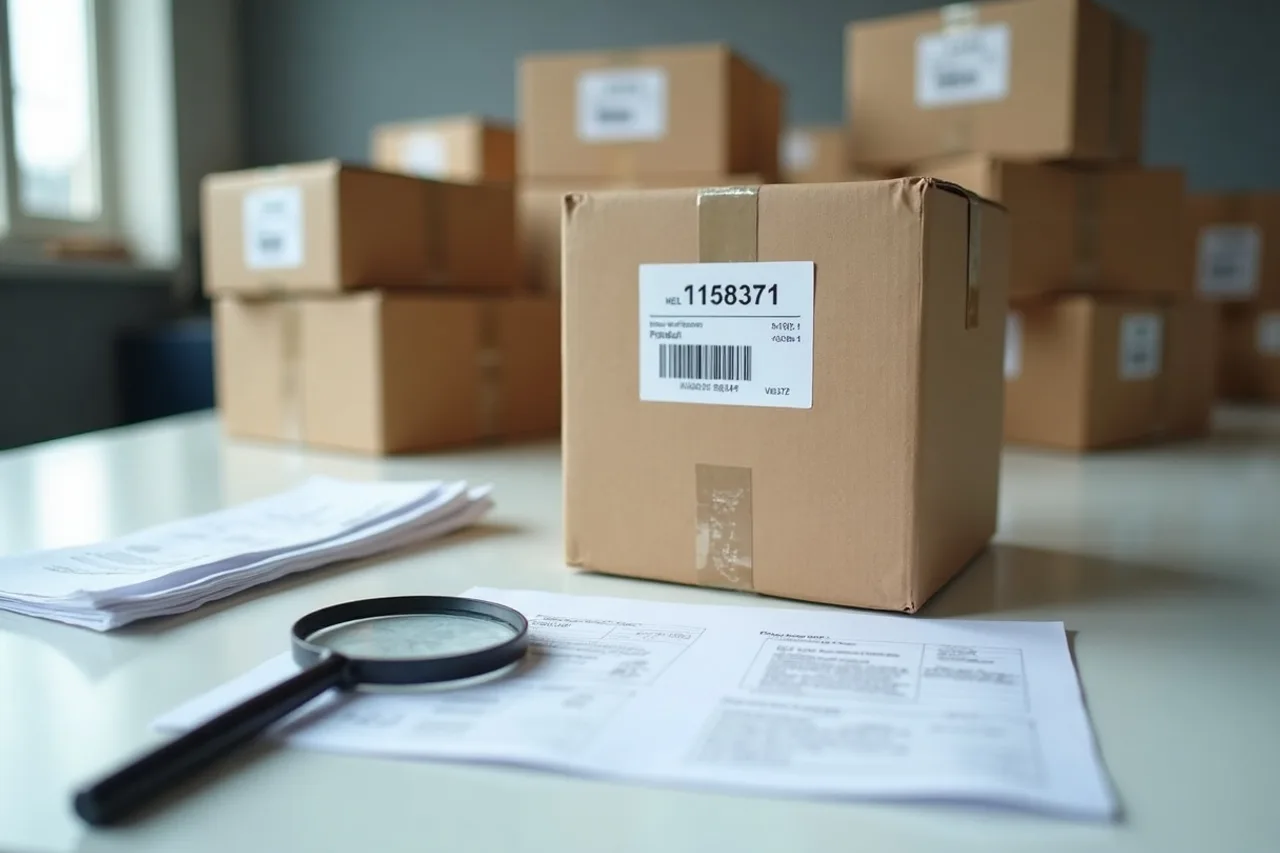
A report comes in to your Allegro shop: several units of the night light you sell are flickering and overheating. UOKiK asks how many units are affected and which batch they came from. You open your records and it turns out all 1,200 night lights are logged simply as "LED night light" - no batch number, no distinction between deliveries. Now your only option is to recall everything, because you can't pinpoint the faulty series. This scenario shows exactly why GPSR (EU) 2023/988 requires traceability. It isn't bureaucracy - it's your safety net for when something goes wrong with a product.
What traceability means under GPSR
Traceability is the ability to unambiguously identify a product and trace its path. In practice, GPSR requires that a product can be identified - through a type, batch, series or model number - and that the manufacturer's and importer's details appear on the product or its packaging. This means that, if a problem arises, the hazard can be linked to a specific series rather than to your entire range.
Traceability is one of the pillars of technical documentation and is closely tied to information obligations - the same data goes on the label and into the documentation.
Batch number versus model number
These two concepts are often confused, but they play different roles:
- Model (type) number - identifies the version of the product as a design. All units of the same model share the same number.
- Batch (series) number - identifies a specific delivery or production run. Two batches of the same model have different batch numbers.
The model number tells you "what it is"; the batch number tells you "which delivery it came from." For an effective recall you need both - the model, to know which product is involved, and the batch, to narrow it down to the faulty series.
What data must be on the product
GPSR requires that the product (or, if that's not possible, the packaging or an accompanying document) carry at least:
| Data | Role |
|---|---|
| Model or type name/number | Identifying the product as a design |
| Batch or series number | Linking to a specific delivery (recall) |
| Manufacturer's name and address | Who made the product |
| Importer's name and address | Who placed it on the EU market |
| Responsible Person's details in the EU | Contact entity under Article 16 |
The Responsible Person's details are a separate, important requirement in their own right - see the details in the article on RP details on the product and in the listing.
How to assign batch numbers when importing from China
If your supplier doesn't mark batches, you need to build your own system. It doesn't need to be complicated - what matters is that it's consistent. A practical approach:
- Assign a number to every delivery - e.g. the format YYYY-MM-number (2026-03-01 for the first March delivery).
- Link the number to purchase documents - invoice, packing list, customs clearance proof.
- Mark the products or packaging - a sticker with the batch number and importer details.
- Record the number in your documentation - so you can reconstruct how many units came from where.
This way, when a problem affects the March delivery, you recall only batch 2026-03-01, not your entire warehouse.
Traceability and product recalls
The real value of traceability shows up in a crisis. When a defect appears, the surveillance authority or you yourself will have to decide on a recall. Without batch numbers, you recall everything - costly and reputationally painful. With batch numbers, you limit the action to the faulty series. That's the difference between a local problem and pulling your entire range from the market.
Link to instructions and archiving
The model and batch number also appears on the label and in the instructions for use, which lets warnings be linked to a specific version of the product. Keep records of batches and deliveries together with the technical documentation for 10 years - more on this in the article on archiving documentation. Traceability without retained records loses its purpose.
Frequently asked questions
Do I need to mark every single unit with a batch number?
A batch number applies to a series, so units from the same delivery can share the same batch number. What matters is being able to distinguish different deliveries of the same model. The number is placed on the product, or on the packaging if that isn't possible.
What if the product is too small to print the data on?
If it's physically impossible to fit all the data on the product, GPSR allows it to be placed on the packaging or in an accompanying document. What's essential is that the information reaches the consumer and the surveillance authority.
Will my Chinese supplier assign batch numbers for me?
Sometimes, but not always in a form useful for a recall. As the importer, you're responsible for traceability regardless - it's safest to run your own consistent delivery-numbering system.
How long do I need to keep batch records?
Together with the technical documentation - for 10 years from the product being placed on the market. Batch records are needed so that, during that period, you can identify and, if necessary, recall a specific series.
Sort out traceability before a problem appears
Traceability under GPSR - model and batch numbers plus manufacturer and importer details - is your safety net for when a product defect appears. GPSRReady templates include a ready-made batch-numbering system, identification label templates and a delivery register compliant with Regulation (EU) 2023/988. Instead of recalling your whole warehouse, you'll be able to point to a single faulty series.