GPSR for Clothing and Textiles
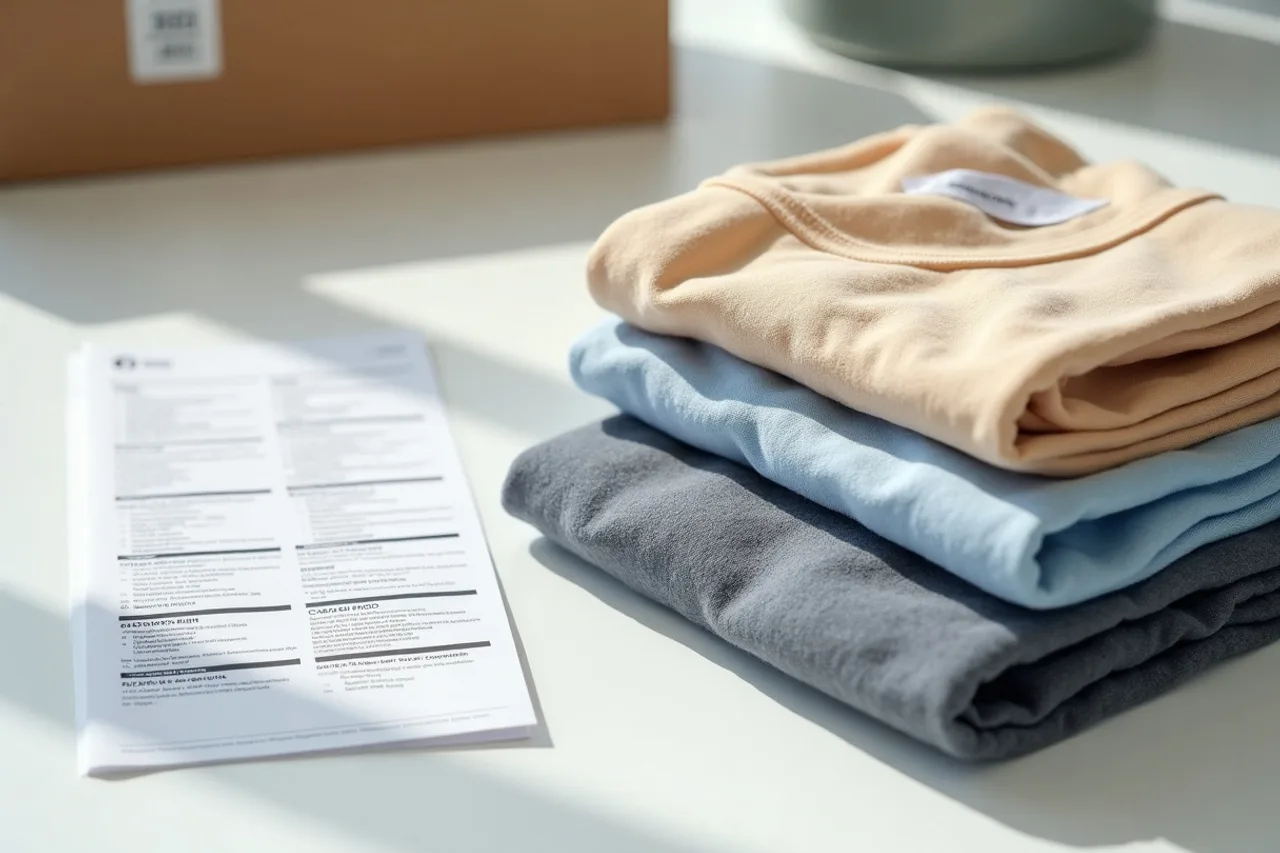
A seller importing t-shirts, hoodies and textile accessories from Asia was convinced that clothing was a "low risk" category and that GPSR barely applied to it.
A seller importing t-shirts, hoodies and textile accessories from Asia was convinced that clothing was a "low risk" category and that GPSR barely applied to it. After the first compliance notice from Amazon, he realised that the GPSR Regulation (EU) 2023/988, in force since 13 December 2024, covers textiles too. Clothing doesn't have its own directive with CE marking the way electronics or toys do, but that doesn't mean it's free of obligations. GPSR requires a safety assessment, traceability and RP details, and on top of that come fibre-composition labelling rules and other sector-specific regulations.
Why textiles are subject to GPSR
GPSR covers all consumer products that aren't specifically regulated by other, more targeted rules. Clothing and textiles mostly lack a dedicated safety directive with CE marking, so GPSR acts as their basic safety regime. That means an obligation to carry out a risk assessment, ensure traceability, and appoint a Responsible Person (RP) in the EU.
What hazards apply to clothing
Although clothing seems safe, the risk assessment must take into account real hazards:
- Chemical substances - dyes, finishes, residues of substances restricted under REACH,
- Detachable elements - buttons, sequins, appliqués, especially on children's clothing (choking hazard),
- Cords and drawstrings - on children's clothing they can pose a strangulation risk,
- Flammability - relevant for nightwear and certain materials,
- Allergic reactions - e.g. nickel in metal elements.
Children's clothing means increased risk
Children's clothing is treated with particular strictness. Besides GPSR, requirements apply here regarding cords and drawstrings in children's clothing (the standard on the safety of children's clothing) and tighter limits on chemical substances. Elements that could detach must be designed so they don't pose a choking hazard for small children.
Labelling of textiles
Besides GPSR, clothing is subject to rules on fibre-composition labelling. Consumers must know what their clothing is made of.
| Label element | Legal basis |
|---|---|
| Fibre composition (e.g. 100% cotton) | Textile fibre naming regulations |
| Manufacturer and RP details | GPSR |
| Product identifier (batch, model) | GPSR |
| Warnings (e.g. for children's clothing) | GPSR and sector-specific rules |
| Care instructions | Market practice and consumer expectations |
What GPSR requires of a textile seller
Specific obligations arising from the regulation:
- carrying out a risk assessment for each product,
- ensuring traceability (manufacturer details, RP, batch number),
- stating RP details in the online listing and on the product,
- warnings in Polish where needed,
- readiness to cooperate with authorities and to withdraw the product.
We cover the basics of the RP's role in RP for a seller based outside the EU - obligations, and how to use a single set of documentation across multiple platforms in Multi-channel selling and GPSR - one set of documentation.
Common mistakes in the clothing category
- treating clothing as "outside the scope of GPSR",
- no risk assessment for chemical substances in dyes and finishes,
- ignoring tighter requirements for children's clothing,
- missing RP details in the listing,
- skipping the fibre-composition label.
Checklist for a clothing seller
- carry out a risk assessment covering chemistry and detachable elements,
- for children's clothing, check the requirements on cords and small parts,
- provide a composition label and product identifier,
- appoint an RP in the EU and state their details,
- prepare a withdrawal procedure in case of a hazard.
Frequently asked questions
Does clothing need CE marking?
No. Standard clothing has no directive with CE marking. It is subject to GPSR as a general safety regime and to fibre-composition labelling rules.
Does GPSR apply to an ordinary t-shirt?
Yes. GPSR covers all consumer products, including simple clothing. A risk assessment must be carried out and RP details and traceability must be ensured.
Why does children's clothing have extra requirements?
Because it involves increased risk: cords can pose a strangulation hazard, and small parts a choking hazard. That's why tighter requirements apply here.
Do I need to test the chemical composition of textiles?
The risk assessment must take into account chemical substances (e.g. dyes, finishes) in light of REACH rules. In practice, this means obtaining compliance confirmations from the manufacturer.
Selling clothing and textiles in the EU?
GPSRReady packages include templates for risk assessments, technical documentation and labels with RP details, tailored to textiles, including children's clothing. Get your assortment ready for inspections and platform requirements.
See GPSRReady packages