GPSR for Electronics: CE, RoHS and GPSR
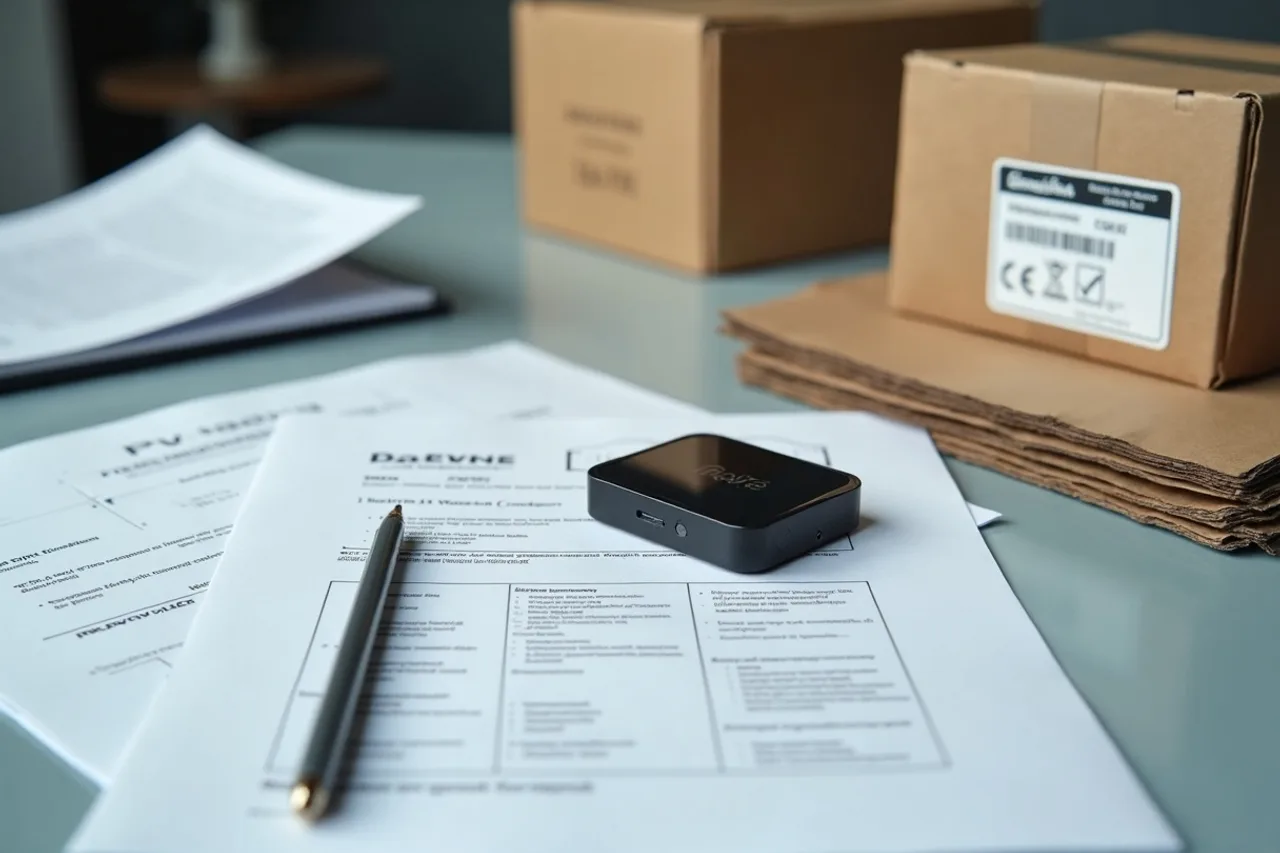
GPSR for electronics: what CE marking, the RoHS Directive and GPSR (EU) 2023/988 each mean for an importer of chargers, LED lamps and gadgets from Asia.
An importer selling USB chargers, LED lamps, Bluetooth speakers and small electronic gadgets from Asia was faced with the question of which regulations apply to him. Amazon shows compliance requirements for his category, and the supplier in China assures him that "the product has CE". The trouble is, for electronics the phrase "CE" alone isn't enough. An electronic product is subject to several regimes at once: sector-specific directives with CE marking, the RoHS Directive restricting hazardous substances, and the GPSR Regulation (EU) 2023/988 as a general safety layer. This article sets out what each of these elements means.
Three compliance layers for electronics
Consumer electronics is one of the most heavily regulated categories. You need to meet:
- Sector-specific directives with CE marking - e.g. electromagnetic compatibility and requirements for low-voltage equipment,
- The RoHS Directive - restriction of hazardous substances in electrical and electronic equipment,
- GPSR - general product safety, traceability, RP details and warnings.
On top of that, if the equipment is battery-powered or contains radio equipment (Bluetooth, Wi-Fi), further sector-specific rules apply. GPSR doesn't replace any of them - it ties the whole thing together at the level of general safety.
What CE marking means for electronics
CE marking is the manufacturer's declaration that the product meets all applicable EU directives. For typical consumer electronics this usually means electromagnetic compatibility (EMC) and the electrical safety of low-voltage equipment (LVD), and for radio equipment, the Radio Equipment Directive. The manufacturer draws up the EU Declaration of Conformity and keeps technical documentation confirming that the standards are met.
The RoHS Directive
RoHS restricts the content of specific hazardous substances in electrical and electronic equipment, including lead, mercury, cadmium and certain brominated compounds. RoHS compliance is part of the assessment that allows CE marking to be applied to electronic equipment. For a seller, this means you need confirmation from the manufacturer that the equipment meets RoHS limits.
Requirements at a glance
| Element | What it covers | Who is responsible |
|---|---|---|
| CE marking | Conformity with directives (EMC, LVD, radio) | Manufacturer applies it, RP verifies it |
| RoHS | Limits on hazardous substances | Manufacturer, confirmation for the seller |
| GPSR | General safety, RP details, warnings | Manufacturer, importer, RP |
| EU Declaration of Conformity | Formal statement of conformity | Manufacturer |
| Warnings in Polish | Instructions and safety of use | Seller ensures translation |
What GPSR adds to electronics
GPSR supplements the CE and RoHS regime with market-surveillance elements: the obligation to name a Responsible Person (RP) in the EU, product traceability, details in the online listing, accident-reporting procedures, and a withdrawal-and-recall mechanism. Even if the equipment has correct CE marking and RoHS compliance, without RP details and warnings in Polish, the listing can be blocked on the platform.
We explain the RP's role in RP for a seller based outside the EU - obligations, and the withdrawal process in Safety Gate, reporting and product withdrawal - GPSR.
Common mistakes made by electronics sellers
- assuming that "CE from the Chinese supplier" removes the need to verify the documentation,
- missing an EU Declaration of Conformity in the technical documentation,
- skipping confirmation of RoHS compliance,
- missing RP details and warnings in Polish in the listing,
- ignoring additional rules for radio equipment and batteries.
Checklist for an electronics seller
- obtain the EU Declaration of Conformity and technical documentation from the manufacturer,
- confirm RoHS compliance,
- check that CE marking covers the right directives (EMC, LVD, possibly radio),
- appoint an RP in the EU and state their details in the listing,
- translate instructions and warnings into Polish,
- prepare a withdrawal procedure in case of a hazard.
Frequently asked questions
Does CE automatically mean GPSR compliance?
No. CE confirms conformity with sector-specific directives, but GPSR adds requirements regarding the RP, traceability and warnings, which CE doesn't cover.
Do I need proof of RoHS compliance?
Yes. RoHS is part of the assessment that allows CE marking on electronics, so it's worth obtaining confirmation from the manufacturer that the limits are met.
Should I trust a CE declaration from a Chinese supplier?
Not uncritically. The RP must verify that the declaration of conformity and the technical documentation actually exist and are correct. Responsibility rests with the entity based in the EU.
Is a Bluetooth speaker subject to additional rules?
Yes. Equipment with a radio module (Bluetooth, Wi-Fi) is subject to the Radio Equipment Directive, alongside EMC and LVD, and GPSR adds a general-safety layer.
Importing electronics and getting lost in CE, RoHS and GPSR?
GPSRReady packages include templates for technical documentation, risk assessments, labels with RP details, and checklists tying together CE, RoHS and GPSR requirements. Get your electronics compliance sorted without guesswork.
See GPSRReady packages